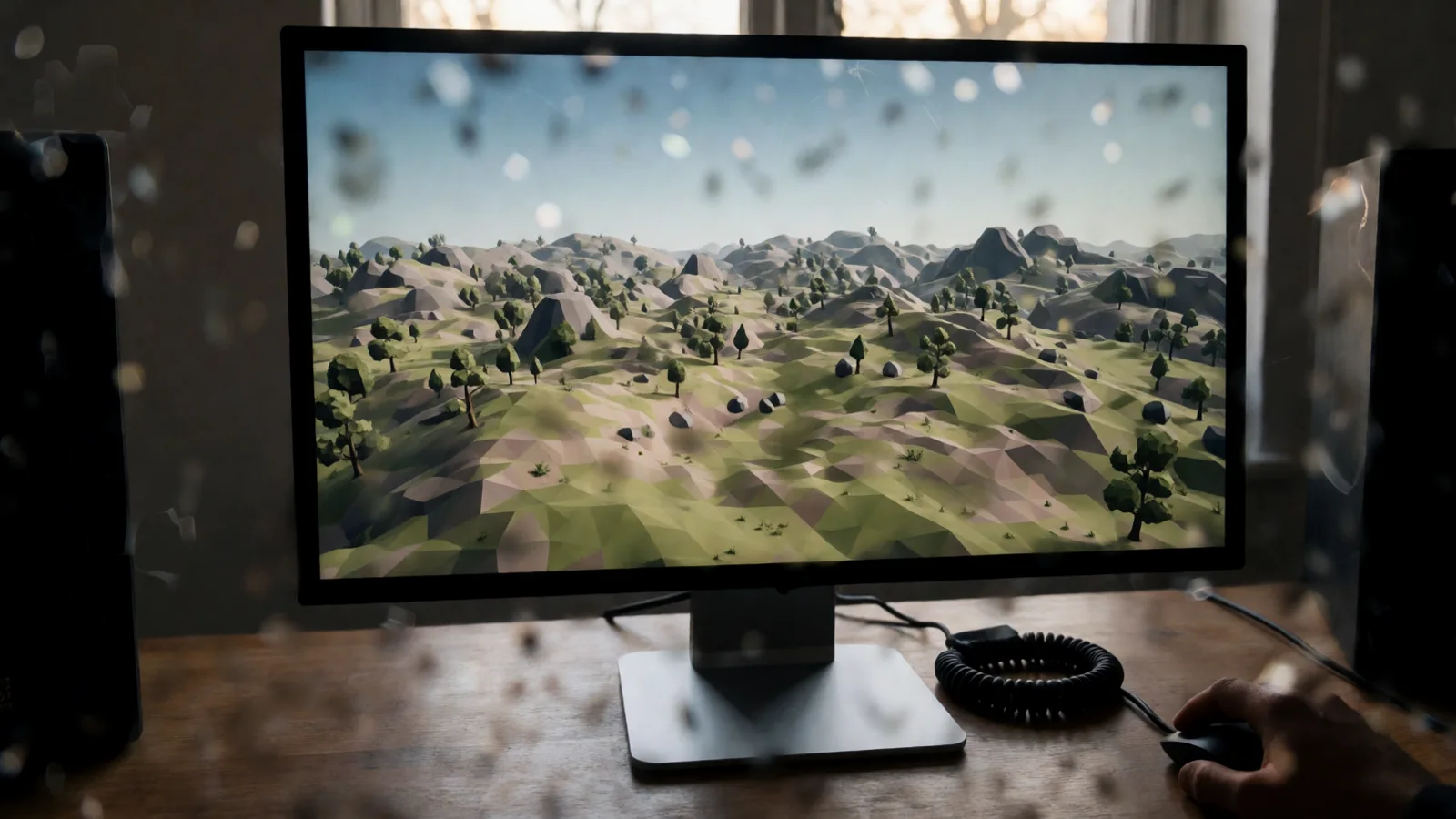
Procedural Generation Software for Games: Unity Performance
Procedural generation software for games is the discipline of algorithmically creating content—levels, loot, terrain, quests, and dialogue—at runtime or build time, and in Unity it succeeds only when generation is deterministic, pooled, and budgeted against your frame time. RealSoft Games builds production-grade procedural systems: from wave-based spawners with integrated object pooling to 40+ XP curve algorithms, each tool is engineered to cut dev time by 60% while holding zero-allocation hot paths. This guide breaks down the architecture, the performance traps, and the modular systems that ship.
Procedural generation is not a magic content hose. It is a systems-engineering problem. You are trading authored certainty for combinatorial variety, and the bill comes due in CPU cycles, memory churn, and determinism bugs that surface only in multiplayer. The studios that win treat generation as a first-class subsystem with its own frame budget, its own pooling strategy, and its own test harness.

What Is Procedural Generation Software for Games?
Procedural generation software for games is a toolchain that produces game content from rules rather than hand placement. In Unity, that means C# systems that emit meshes, spawn prefabs, roll loot tables, and assemble quest graphs from seeded random streams. The output must be reproducible: same seed, same world, every run.
There are two execution models, and choosing wrong is the most common architectural mistake we see:
- Build-time generation — content is baked into assets before shipping. Zero runtime cost, but no variety between sessions.
- Runtime generation — content is created on demand. Infinite variety, but every millisecond competes with rendering and physics.
- Hybrid generation — a baked skeleton with runtime variation layered on top. The default choice for RPGs and open-world games.
The hybrid model wins because it keeps the expensive structural work offline while letting runtime systems vary loot, encounters, and dialogue. That is exactly how Virtual Sim Story: Home & Life handles procedural furniture, characters, and dialogue—the structural rules are authored, the permutations are generated.
Deterministic procedural generation means a given seed always produces identical output across platforms and sessions. It is non-negotiable for multiplayer, replays, and save/load integrity.
Why Procedural Generation Breaks Your Frame Budget
Generation is bursty. A dungeon room assembles in one frame, a loot table rolls in another, and a wave of enemies spawns all at once. That burst pattern is hostile to a 16.6 ms frame budget at 60 FPS, and it is where most procedural systems fail in production.
The three costs that dominate are allocation, instantiation, and serialization. Each has a known fix, and each fix is a system you should not rewrite from scratch.
Allocation churn and the GC spike
Every new in a generation loop feeds the garbage collector. A loot roll that allocates a list per item, or a spawner that news up a prefab array per wave, produces GC spikes that stutter VR and mobile alike. The fix is object pooling and struct-based data flow—zero-allocation hot paths.
Our Spawner Advanced & Pooling ships pooling as a first-class feature, not an afterthought. Wave-based spawning, randomization, and lifecycle management all run against pre-warmed pools, so a 200-enemy wave costs activation, not instantiation. See how it performs in Spawner Advanced & Pooling.
Instantiate() is not a generation strategy
Unity's Instantiate() is expensive: it clones the hierarchy, allocates components, and triggers Awake/OnEnable. Calling it inside a generation loop is the single biggest source of frame drops we diagnose. Pooling converts that cost into a pointer swap.
"Procedural generation is only as fast as its slowest allocation. Pool the objects, seed the streams, and the frame budget holds."
— RealSoft Games engineering
Building Modular Procedural Systems in Unity
Modularity is what separates a procedural system you can ship from a prototype you abandon. The rule: every generator is a pure function of (seed, config) that returns data, and a separate applier turns that data into scene objects. Data and presentation never mix.
- Define the seed contract. One master seed derives child streams via hashing, so subsystems never share global
Randomstate. - Generate data, not GameObjects. Emit structs—spawn requests, loot results, room descriptors—into pooled buffers.
- Apply in a budgeted pass. A scheduler drains the request queue across frames, respecting a per-frame generation budget.
- Persist only deltas. Save the seed and the player's changes, never the full generated state.
This architecture is why our RPG systems compose cleanly. The Inventory Management Suite owns loot tables and currencies; the Advanced Leveling System owns XP curves and stat growth; the Advanced Skill System owns cooldowns and projectiles. Each is a modular generator with a defined seed contract, wired through the Unity Extensions suite.
Data tables that survive generation
Procedural content is only as good as the data feeding it. The table below compares the generation models against their real cost profile in a Unity project.
| Generation Model | Runtime Cost | Variety | Best For |
|---|---|---|---|
| Build-time baked | ~0 ms | None per session | Static levels, tutorials |
| Runtime full | 2–8 ms per burst | Infinite | Roguelikes, sandbox |
| Hybrid seeded | 0.2–1.5 ms | High | RPGs, open-world |
| Streamed chunked | 0.5–2 ms amortized | High | Large worlds, VR |
Profile generation with the Profiler's Deep Profile off and custom ProfilerMarker scopes on. Deep Profile distorts allocation numbers by 10x or more and will send you optimizing the wrong function.
Procedural Generation for RPG Mechanics: Leveling, Loot, and Skills
RPGs are the natural home of procedural generation because their content is already rule-based. XP curves, loot tables, skill trees, and encounter composition are all parametric—perfect candidates for seeded generation.
The Advanced Leveling System is a concrete example: 40+ XP curve algorithms, level-up events, stat growth, and save/load support. Instead of hardcoding one curve, you generate progression from a curve definition, so a designer can tune pacing without a code change. That is procedural design applied to mechanics, not just content.
Loot is the other half. The Inventory Management Suite generates item rolls from weighted tables with currencies, merchants, auction house, and mailbox—all persisted through MongoDB. The generation is deterministic per seed, so two players in the same session see the same drop.

Balancing generated difficulty
Generated difficulty needs a governor. We recommend a target-power budget: compute the player's expected stat total from the leveling curve, then generate encounters whose threat falls within a band around it. Without that governor, procedural RPGs oscillate between trivial and unwinnable.
Networking, Determinism, and Multiplayer Generation
Multiplayer procedural generation lives or dies on determinism. If the server and client generate different loot from the same seed, you get desyncs, exploit reports, and corrupted saves. The rule is absolute: the server owns the seed and the generation result; clients receive deltas.
Our RNet RPC library is built for this constraint—runtime code generation and optimized serialization keep state sync cheap, and the seed travels as a single integer rather than the generated payload. For lockstep titles like Arcadus, the same discipline applies: every peer runs the generator, and determinism guarantees identical output.
| Networking Model | Who Generates | Payload | Risk |
|---|---|---|---|
| Server-authoritative | Server only | Result deltas | Bandwidth |
| Lockstep deterministic | All peers | Seed + inputs | Desync on float drift |
| Hybrid | Server seeds, clients render | Seed + deltas | Complexity |
Never use UnityEngine.Random in networked generation. It is global mutable state. Use per-system seeded System.Random or a custom PCG, and serialize the seed—not the result.
Procedural Generation in VR, AR, and WebGL
VR raises the stakes because a dropped frame is nausea, not a stutter. Redemptions Guild, our 1–4 player VR action RPG, runs procedural encounters under a strict frame budget: generation is scheduled off the render thread, pools are pre-warmed at load, and no burst exceeds the per-frame allowance.
WebGL adds a second constraint: no threads, limited memory, and a hard download budget. Procedural generation is actually an advantage here—generating content at runtime shrinks the build. Our WebGL Games Platform hosts optimized Unity builds that lean on seeded generation to keep payloads small.

Cross-platform generation has one more rule: the same seed must produce the same output on PC, mobile, and WebGL. Floating-point determinism is the enemy—prefer integer math and fixed-point where generation affects gameplay.
AI and LLM Integration in Procedural Content
The newest layer is LLM-driven generation: dialogue, quest text, and NPC behavior produced at runtime. The architecture is the same as any other generator—seed, config, budgeted apply—but the latency profile is different. An LLM call is 200–2000 ms, so it can never block a frame.
Our LLM Chat Module connects World of Warcraft to local LLM providers like Ollama and LM Studio for dynamic NPC dialogue. The pattern generalizes: generate asynchronously, cache aggressively, and fall back to a deterministic template when the model is slow or unavailable. Procedural generation and LLM generation are the same discipline—rules plus variety, budgeted.
"The best procedural system is boring to profile: no spikes, no allocations, no surprises. Variety is the output—predictability is the engineering."
— RealSoft Games engineering
How Do I Choose Procedural Generation Software for Games?
Choose based on the constraint you cannot change: your platform. Mobile and WebGL demand zero-allocation generation and small builds. VR demands strict frame budgets and off-thread generation. Multiplayer demands determinism above all. Then verify the toolchain is modular—seeded, pooled, and documented.
RealSoft Games ships that toolchain as composable systems rather than a monolith. Start with the Unity Extensions suite, add the RPG systems you need, and wire custom logic through the RealSoft Games API. Every product ships with API references and integration guides in the Documentation Hub.
Budget generation explicitly. Reserve 1–2 ms of your frame for procedural work and enforce it with a scheduler. A generation system without a budget is a stutter generator.
Procedural generation software for games is a performance discipline before it is a content strategy. Seed your streams, pool your objects, budget your bursts, and keep generation deterministic across the network. Do that, and procedural systems cut dev time by 60% while holding your frame budget—on flat screens, in VR, and in the browser.
Frequently Asked Questions
What is procedural generation software for games?
It is a toolchain that creates game content—levels, loot, terrain, dialogue—from rules and seeds rather than hand placement. In Unity, it means C# systems that emit data deterministically and apply it within a frame budget.
How do I make procedural generation deterministic in multiplayer?
Use per-system seeded random streams instead of global Random state, prefer integer math, and let the server own the seed. Send the seed and result deltas over RPC—never regenerate independently on clients unless you run lockstep.
Why does procedural generation cause frame drops in Unity?
Because generation is bursty and allocates. Instantiate calls, list allocations, and serialization inside generation loops trigger GC spikes. Pooling, struct-based data, and a per-frame generation budget eliminate the spikes.
What is the best procedural generation approach for VR games?
Off-thread, budgeted, and pooled. Pre-warm pools at load, schedule generation across frames, and never exceed a 1–2 ms per-frame allowance. Dropped frames in VR cause nausea, so the budget is non-negotiable.
Can LLMs be used for procedural content generation?
Yes, for dialogue and quest text. Generate asynchronously, cache results, and fall back to deterministic templates. The LLM Chat Module shows the pattern with local providers like Ollama and LM Studio.