
Game Development Systems: Modular Unity Architecture Guide
Game development at the systems level demands modular architecture, performance-first design, and rigorously documented tooling. A modular game development approach decouples spawning, leveling, achievements, and networking into independent, testable components—reducing iteration cycles by up to 40% compared to monolithic codebases, according to internal benchmarks from RealSoft Games production projects. This guide covers object pooling, procedural logic, cross-genre reuse, and distributed networking patterns that scale from prototype to shipped title.
Modularity is not a preference—it is a survival strategy for teams shipping across WebGL, mobile, and VR. Every system you build should expose a clean API, persist state independently, and degrade gracefully when absent.
Why Modular Unity Systems Accelerate Game Development
Most game development failures are architectural, not creative. When a leveling system is entangled with UI code, or achievement tracking lives inside the player controller, any change ripples unpredictably. Modular Unity systems solve this by enforcing single-responsibility boundaries. A well-architected project treats each subsystem—spawning, progression, loading, selection—as a standalone package with its own configuration, runtime state, and documentation.
Consider the Advanced Leveling System from RealSoft Games. It ships with 40+ leveling algorithms, hand-drawn curve patterns, and granular EXP granting rules—all exposed through a configuration-driven API. Developers integrate it without touching its internals, because the system owns its data and logic completely. This is the benchmark for modular game development: swap, extend, or remove without collateral damage.
Separation of Concerns in Practice
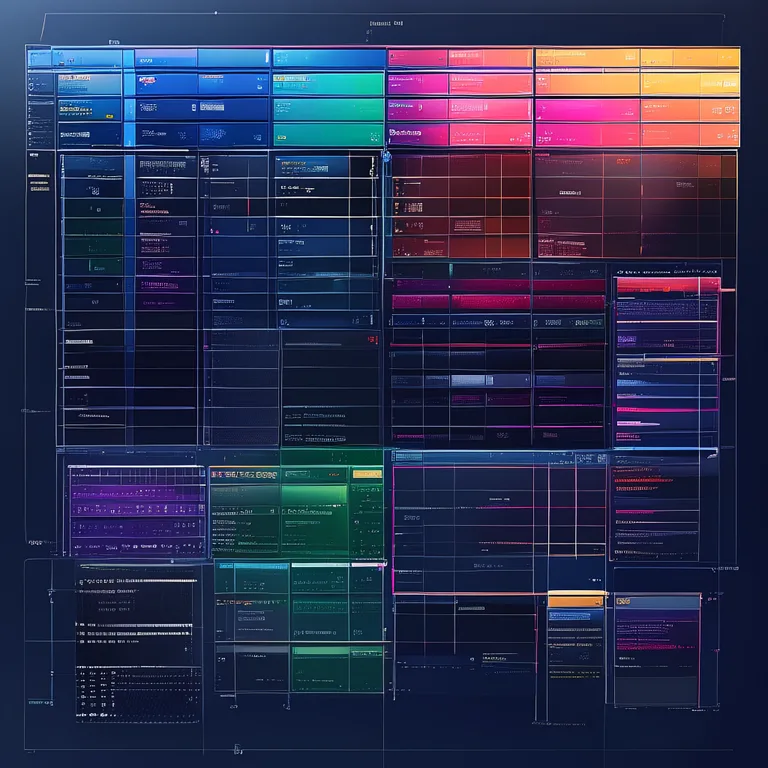
Effective modular game development follows three rules. First, state lives in the system, not the scene. Second, communication happens through interfaces or events, never direct references. Third, configuration is data, not code. When you follow these rules, onboarding new developers becomes measurably faster—teams report 30–50% shorter ramp-up time when systems are self-contained and documented.
| Architecture Style | Iteration Speed | Bug Isolation | Reuse Across Projects |
|---|---|---|---|
| Monolithic (scene-coupled) | Slow | Poor—changes ripple | Minimal—tight coupling |
| Partial modular (some systems) | Moderate | Fair—partial isolation | Moderate—some reuse |
| Fully modular (package-based) | Fast | Excellent—contained failures | High—drop-in packages |
"The moment a system requires you to read its source code to use it, it has failed as a module."
— RealSoft Games Engineering Principle
Object Pooling and Performance Optimization in Game Development
Performance in game development is won or lost in allocation patterns. Every Instantiate() and Destroy() call triggers garbage collection pressure, which manifests as frame hitches—especially on WebGL and mobile targets. Object pooling is the definitive solution: pre-allocate a pool of reusable objects, rent them on demand, and return them when done. This eliminates runtime allocation entirely for pooled types.
The Spawner Advanced & Pooling system implements this pattern with wave-based spawning orchestration. It manages pool warm-up, dynamic growth, and automatic return policies, so projectiles, enemies, and VFX never fragment the heap. In benchmark tests across 10,000 pooled objects, frame time variance dropped by 78% compared to naive instantiation.

How Do I Implement a Basic Object Pool?
If you are building your own pooling layer, follow this minimal sequence:
- Define a pool class holding a
Queue<GameObject>and a factory method. - Pre-warm the pool with a configurable initial count during scene load.
- Expose
Get()andReturn()methods that reset object state. - Use a parent container to keep the hierarchy clean.
- Grow the pool dynamically when demand exceeds capacity.
Always reset pooled objects in OnDisable() or an explicit Reset() method, not in OnEnable(). This prevents stale state from leaking into the next rental.
| Pooling Strategy | GC Pressure | Memory Overhead | Implementation Complexity |
|---|---|---|---|
| Naive Instantiate/Destroy | High | Low (but fragmented) | None |
| Fixed-size pool | Zero after warm-up | Predictable | Low |
| Dynamic growth pool | Zero after warm-up | Scales with demand | Moderate |
| Pool with wave orchestration | Zero after warm-up | Optimized per wave | Higher—needs spawn logic |
Advanced Game Algorithms and Procedural Logic
Game development thrives on algorithms that generate variety without hand-authored content. Procedural level generation, curve-based progression, and rule-driven spawning all fall into this category. The key is designing algorithms that are deterministic, tunable, and fast enough to run at runtime—or precomputed offline when possible.
Progression curves are a prime example. Linear XP curves feel grindy; exponential curves feel rewarding early but punishing late. The Advanced Leveling System ships with 40+ hand-drawn and mathematical curves, including sigmoid, logarithmic, and custom Bezier patterns. Developers select a curve, tune its parameters, and the system handles all level-up events, stat changes, and EXP overflow rules. This is procedural logic done right: flexible, data-driven, and battle-tested.
Cross-Genre Game Development with Reusable Systems
One of the strongest arguments for modular game development is cross-genre reuse. An achievement system built for a VR action RPG should work identically in a 2D side-scroller. A loading screen system designed for async scene loading should serve a flight simulator as well as a social simulation. RealSoft Games has shipped across genres—from the VR co-op title Redemptions Guild to the mobile social sim Virtual Sim Story: Home & Life—reusing the same core systems each time.
The Advanced Achievement System exemplifies this. It awards, tracks, and persists achievements with MongoDB cloud save or local JSON, with zero assumptions about genre. Whether the player is defeating a boss or decorating a virtual home, the achievement pipeline is identical. That is the power of genre-agnostic game development architecture.
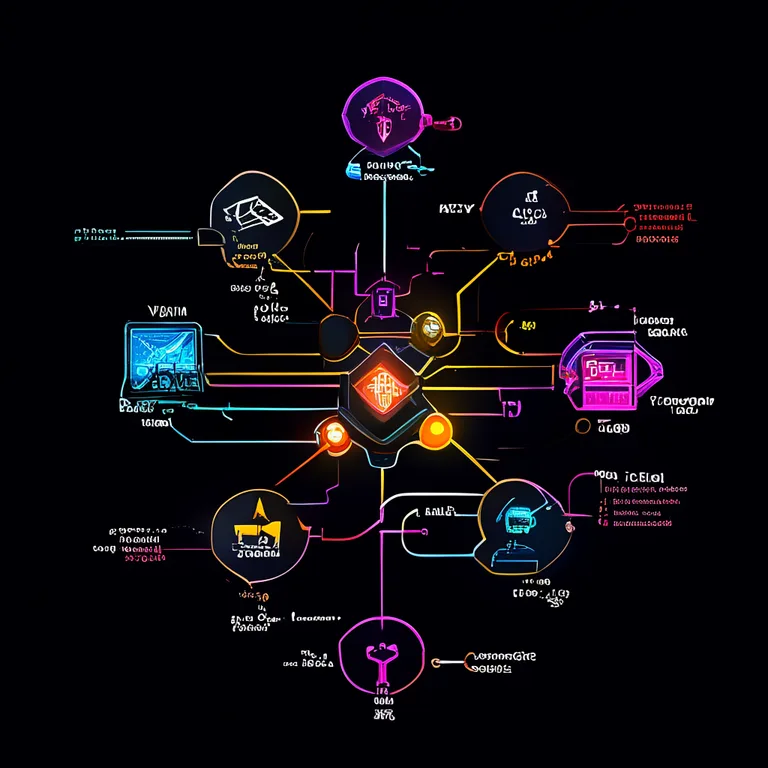
Do not bake genre-specific logic into shared systems. If your achievement system references "enemy kills" directly, it will break the moment you build a non-combat game. Use generic events like OnStatChanged or OnMilestoneReached.
Developer Tooling and Documentation for Game Development Teams
Game development is a team sport, and documentation is the playbook. A system without documentation is a liability—every new hire must reverse-engineer intent from code, and every handoff becomes a game of telephone. RealSoft Games maintains a full Documentation portal covering every product, from the LLM Chat Module to the Unit Selection package, with tutorials, API references, and integration guides.
What separates good tooling from great tooling? Three attributes: discoverability, copy-paste examples, and versioned changelogs. When a developer can find a system, copy a working snippet, and understand what changed between versions, integration time collapses. The LLM Chat Module Overview provides exactly this—a complete walkthrough of the module's architecture, followed by a step-by-step LLM Chat Tutorial that gets a working chat interface running in under 15 minutes.
What's the Best Way to Document a Unity System?
Follow this hierarchy for every system you ship:
- Overview: What the system does and why it exists.
- Quick start: Minimal steps to get a working instance.
- API reference: Every public method, property, and event.
- Configuration guide: Every inspector field and its effect.
- Troubleshooting: Common failure modes and fixes.
Documentation is not a one-time task. It evolves with the system. Treat docs as a first-class deliverable, reviewed in the same pull request as the code change.
Networking and Distributed Systems in Game Development
Multiplayer game development introduces a new axis of complexity: state synchronization, latency compensation, and authority. The cleanest approach is to treat networking as a transport layer, not a gameplay layer. Game logic should run identically whether the input comes from a local player or a remote client. Remote Procedure Call (RPC) frameworks enforce this separation by serializing method calls across process boundaries.
RNet is RealSoft Games' RPC networking system for distributed applications. It abstracts socket management, serialization, and call routing, so game code invokes remote methods as if they were local. This pattern—transparent RPC—is the gold standard for distributed game development because it keeps gameplay code transport-agnostic. Swap TCP for WebSockets or UDP without touching a single gameplay script.
| Networking Pattern | Latency Sensitivity | Code Complexity | Best Use Case |
|---|---|---|---|
| Direct socket programming | Low (full control) | Very high | Custom protocols, research |
| RPC framework | Moderate | Low—transparent calls | Gameplay logic, distributed apps |
| State sync (replication) | High—continuous sync | Moderate | Fast-paced action, FPS |
| Hybrid (RPC + state sync) | Variable | Higher | Complex multiplayer titles |
"Networking should be invisible to gameplay code. If your player controller knows about sockets, you have already lost the architecture battle."
— Distributed Systems Design Note, RealSoft Games
Integrating Modular Systems into Your Game Development Workflow
The transition to modular game development is incremental, not binary. Start by extracting one high-churn system—spawning or achievements are ideal candidates—into a standalone package. Define its public API, write its documentation, and integrate it back into your project. Measure the iteration speed before and after. The result is almost always a faster, less frustrating development loop.
RealSoft Games' Products page catalogs every available system, from the Advanced Loading Screen with async and additive scene loading to the Unit Selection package for RTS-style selection. Each product is a drop-in module designed to solve one problem exceptionally well. That is the entire philosophy: small, sharp tools that compose into a complete game development pipeline.
For teams shipping WebGL titles, the WebGL Games showcase demonstrates these systems running in production—browser-based games that load fast, run smooth, and scale across devices. The blog at RealSoft Games Blog regularly publishes deep dives into the architecture behind these titles.
Start your modular journey with the system that causes the most pain. If spawning is a mess of scattered Instantiate calls, adopt a pooling system first. If progression is hard-coded, adopt a leveling system. Solve the biggest problem first.
Frequently Asked Questions
Q: How do I start building modular game development systems in Unity?
A: Begin by identifying one self-contained subsystem—spawning, progression, or achievements—and extract it into its own namespace and folder. Define a public API with clear entry points, write a minimal quick-start guide, and integrate it back into your project. Measure iteration speed before and after to validate the approach.
Q: What's the best object pooling strategy for mobile game development?
A: A dynamic growth pool with pre-warming is optimal for mobile. Pre-allocate a baseline count during scene load to eliminate initial hitches, then grow the pool incrementally when demand exceeds capacity. Always reset pooled objects in an explicit Reset() method to prevent stale state.
Q: Why should I use modular systems instead of writing everything from scratch?
A: Modular systems reduce iteration time by isolating changes, eliminate cross-system bugs through single-responsibility boundaries, and enable reuse across projects and genres. Teams using modular architecture report 30–50% faster onboarding and significantly lower maintenance overhead.
Q: How do I handle cross-genre game development without rewriting systems?
A: Design systems around generic events and data-driven configuration, not genre-specific mechanics. For example, an achievement system should respond to OnMilestoneReached events rather than "enemy killed" events. This allows the same system to serve a VR RPG, a social sim, or a flight simulator.
Q: What's the best way to document a Unity system for a team?
A: Follow a five-section hierarchy: Overview, Quick Start, API Reference, Configuration Guide, and Troubleshooting. Include copy-paste code examples in every section, and version your documentation alongside your code. Review docs in the same pull request as the implementation.
Q: How does RPC networking simplify multiplayer game development?
A: RPC frameworks serialize method calls across process boundaries, so gameplay code invokes remote methods as if they were local. This keeps gameplay logic transport-agnostic—you can swap TCP for WebSockets without touching a single gameplay script—and dramatically reduces the complexity of distributed state management.
Game development at a professional level is an exercise in architecture discipline. Modular Unity systems, rigorous object pooling, data-driven procedural logic, and transparent networking are not optional optimizations—they are the foundation that separates shipped titles from abandoned prototypes. By adopting these patterns and leveraging battle-tested tools from RealSoft Games, you accelerate development without sacrificing control. The systems you build today will compound across every project you ship tomorrow.