
Board Games: Types, Strategy, History, and Digital Play
Board games are tabletop entertainment systems where players manipulate pieces on a pre-marked surface according to a defined ruleset. They combine strategic thinking, social interaction, and structured competition into a physical or digital experience. The global board games market reached $13.8 billion in 2023 and is projected to grow at a 7.8% CAGR through 2030, driven by both tabletop classics and digital adaptations. Whether you're a casual player looking for a family game night option, a competitive strategist mastering complex mechanics, or a developer exploring board game design for digital platforms, understanding board games opens doors to one of humanity's oldest and most enduring forms of play. This guide covers everything from board game types and strategy fundamentals to history, digital transformation, and how to choose the right game for your group.
What Are Board Games and Why Do They Matter?
A board game is any game played on a flat surface where players follow a defined set of rules to achieve a specific objective — whether that's accumulating points, capturing territory, eliminating opponents, or completing a narrative goal. Board games have existed for over 5,000 years, with archaeological evidence of dice games found in ancient Mesopotamia and the Royal Game of Ur dating to 2600 BCE. Today, board games serve three core purposes: entertainment, education, and social bonding. They exercise cognitive skills like planning, probability calculation, and resource management while creating face-to-face social experiences that digital-only games often struggle to replicate.
"Board games are the original social network — they bring people to the same table, the same rules, and the same moment in time."
— RealSoft Games Team
For game developers and designers, board games represent a foundational design language. The mechanics that power modern video games — turn-based combat, inventory systems, skill trees, and progression paths — evolved directly from tabletop game design. Understanding board games is essential for anyone building interactive experiences, which is why RealSoft Games offers tools like the Advanced Leveling System to help developers translate tabletop progression mechanics into digital game systems.
The Anatomy of a Board Game
Every board game consists of four primary components:
- Components: The physical or digital pieces — boards, cards, dice, tokens, miniatures, and player aids
- Rules: The constraint system that defines legal actions, turn order, and victory conditions
- Mechanics: The interactive systems — worker placement, deck building, area control, roll-and-move
- Theme: The narrative or aesthetic layer that makes the game engaging and memorable
These four elements combine to create what game designer Reiner Knizia calls "the magic circle" — a bounded space where players voluntarily accept artificial constraints for the joy of play. The best board games balance all four elements so that no single component overwhelms the others.
Major Types of Board Games
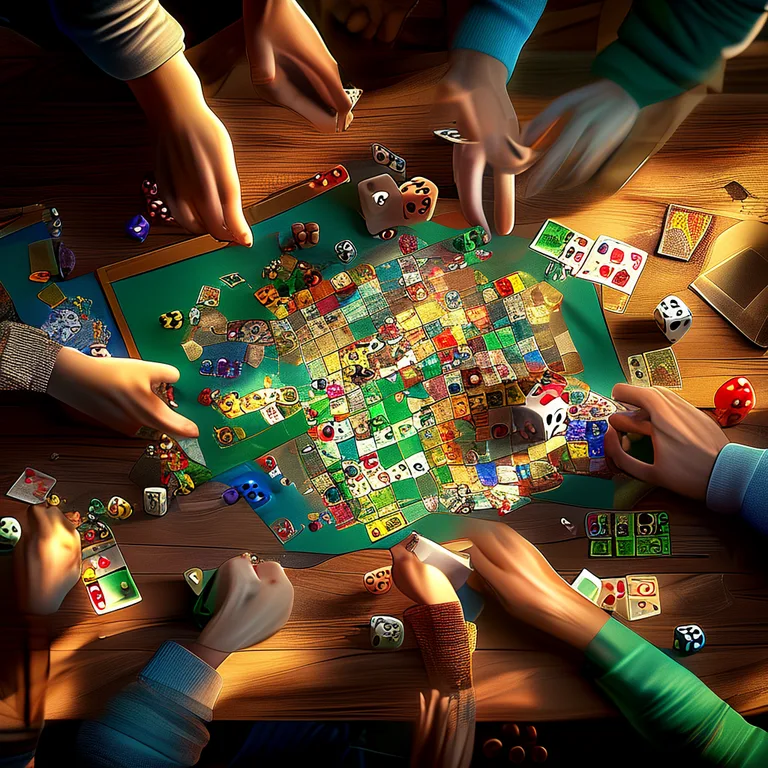
Board games span an enormous design space, but most fall into recognizable categories based on their core mechanics and player objectives. Understanding these categories helps you choose games that match your group's preferences and skill levels. The table below breaks down the most common board game types with their defining characteristics.
| Board Game Type | Core Mechanic | Typical Duration | Player Count | Example Games |
|---|---|---|---|---|
| Abstract Strategy | Perfect information, no luck | 15–60 min | 2 players | Chess, Go, Hive |
| Eurogame / Strategy | Resource management, low conflict | 60–180 min | 2–5 players | Catan, Carcassonne, Agricola |
| Deck Building | Card acquisition, combo building | 30–90 min | 2–4 players | Dominion, Ascension, Clank! |
| Cooperative | Players vs. game system | 45–120 min | 1–6 players | Pandemic, Gloomhaven, Spirit Island |
| Party / Social | Communication, deduction, humor | 15–45 min | 4–12 players | Codenames, Werewolf, Wavelength |
| War / Area Control | Territory capture, dice combat | 90–240 min | 2–6 players | Risk, Twilight Imperium, Root |
Eurogames vs. American-Style Games
The most significant design divide in modern board gaming is between Eurogames and American-style (Ameritrash) games. Eurogames, originating in Germany, emphasize indirect competition, resource efficiency, and minimal player elimination. American-style games prioritize theme, direct conflict, and dramatic moments driven by dice rolls. Most modern hits blend both traditions — games like Scythe combine Eurogame resource management with direct combat and rich theming.
When teaching new players a board game, follow the "3-3-3 rule": explain the objective in 3 sentences, demonstrate 3 turns, and answer 3 questions before starting. This dramatically reduces setup friction and gets everyone playing faster.

How to Choose the Right Board Game
With over 5,000 new board games published annually, choosing the right one can feel overwhelming. The key is matching the game to your group's experience level, time commitment, and social dynamics. Here's a structured approach to board game selection.
Step-by-Step Selection Process
- Assess your group: How many players? What's their experience level? Do they prefer competition or cooperation?
- Define the time budget: Can everyone commit to a 2-hour game, or do you need something that finishes in 30 minutes?
- Identify the social goal: Are you bonding with family, strategizing with hardcore gamers, or breaking the ice at a party?
- Match mechanics to preferences: Do players enjoy luck-based excitement or pure strategy? Deck building or dice rolling?
- Test before committing: Watch a playthrough video, try a digital version, or borrow from a local game library.
For digital game developers looking to understand board game mechanics, the Unity Extensions toolkit provides foundational systems — including turn management, state tracking, and UI components — that translate tabletop mechanics directly into Unity projects.
Board Game Complexity Ratings
BoardGameGeek, the largest board game database, uses a 1–5 complexity scale based on community votes. Here's what each level means in practical terms:
| Complexity Rating | Learning Time | Typical Game Length | Best For | Example |
|---|---|---|---|---|
| 1.0–1.9 (Light) | 5–10 minutes | 15–30 minutes | Families, casual groups, children | Ticket to Ride, Sushi Go! |
| 2.0–2.9 (Medium Light) | 10–20 minutes | 30–60 minutes | Mixed groups, gateway games | Catan, Carcassonne, Wingspan |
| 3.0–3.9 (Medium) | 20–45 minutes | 60–120 minutes | Experienced hobbyists | Terraforming Mars, Everdell |
| 4.0–5.0 (Heavy) | 45–90+ minutes | 120–240+ minutes | Dedicated gamers, strategists | Gloomhaven, Twilight Imperium |
Don't introduce a heavy 4.0+ complexity game to a group of casual players on their first game night. This is the #1 reason board game nights fail — the rules explanation kills enthusiasm before the first turn. Start light, then escalate.
Board Game Strategy: How to Win More Often
Winning at board games isn't about luck — it's about understanding the underlying mathematical and psychological patterns that govern gameplay. Whether you're playing a light party game or a heavy strategy epic, these principles apply across the board.
Core Strategic Principles
- Understand the scoring system: Every board game has a point economy. Identify the most efficient point sources and prioritize them.
- Track opponent actions: In games with limited resources, knowing what your opponents are pursuing helps you avoid contested strategies.
- Balance short-term and long-term gains: Early-game investments often pay off in the late game. Don't sacrifice long-term position for immediate points.
- Recognize the luck-skill ratio: Games with high luck require probability management; games with low luck require pure optimization.
- Adapt to the meta: In repeated plays, strategies that worked the first time may be countered. Stay flexible.
"The best board game players don't just play the game — they play the table. They understand the rules, the probabilities, and the people."
— Competitive Board Gaming Community
Probability in Board Games
Many board games use dice, cards, or random draws to introduce uncertainty. Understanding basic probability dramatically improves your decision-making. For example, in a game using two six-sided dice, the most common roll is 7 (16.67% chance), while 2 and 12 each have only a 2.78% chance. Games like Catan are built around this distribution — settlements placed near 6 and 8 tiles generate resources more frequently than those near 2 and 12.
For designers building digital board games, implementing fair and balanced randomness is critical. The Spawner Advanced & Pooling system from RealSoft Games demonstrates how object pooling and randomization patterns can create consistent, predictable random distributions — a principle that applies equally to dice simulation and card shuffling in digital board game implementations.
Statistically, the average board game player wins 25–33% of games in a 3–4 player group. If you're winning more than 50% consistently, you're either playing with beginners or you've mastered the game's core strategy loop.
The History and Evolution of Board Games
Board games are not a modern invention — they're one of humanity's oldest cultural artifacts. The Royal Game of Ur, discovered in the Royal Cemetery of Ur in modern-day Iraq, dates to approximately 2600 BCE and represents the oldest complete board game ever found. Ancient Egyptians played Senet, a game associated with the afterlife journey, as early as 3100 BCE. These ancient games weren't just entertainment — they were tools for teaching strategy, simulating trade, and preparing young people for adult responsibilities.
Timeline of Board Game Evolution
- 3100 BCE: Senet appears in ancient Egyptian tombs
- 2600 BCE: The Royal Game of Ur is created in Mesopotamia
- 500 BCE: Go emerges in China, still played competitively today
- 600 CE: Chess evolves from Indian game Chaturanga
- 1935: Monopoly is published, popularizing commercial board games
- 1995: Settlers of Catan launches the modern Eurogame revolution
- 2008–2020: Kickstarter enables indie board game publishing at scale
- 2020–present: Digital board games and hybrid tabletop experiences surge
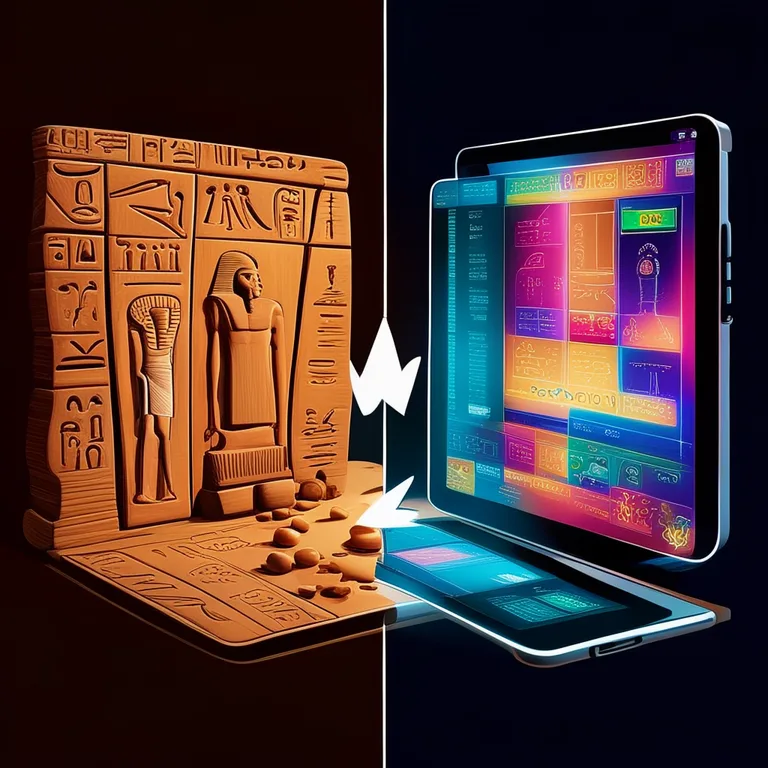
The digital transformation of board games accelerated dramatically in the 2010s. Platforms like Tabletop Simulator and Board Game Arena made thousands of board games playable online, while dedicated digital adaptations like Gloomhaven and Wingspan on Steam brought board game experiences to millions of players who never touched a physical copy. This convergence of tabletop and digital design is exactly what RealSoft Games addresses through its WebGL Games platform — bringing board game mechanics and logic to browser-based play without installation friction.
Digital Board Games: The Future of Tabletop Play
Digital board games are not replacements for physical games — they're an evolution that expands accessibility, enables remote play, and automates complex rule enforcement. The digital board game market grew 34% between 2020 and 2023, driven by pandemic-era remote play needs and the convenience of automated setup and scoring. Digital versions handle the tedious parts of board gaming — shuffling, setup, score tracking, and rule enforcement — allowing players to focus purely on strategy and social interaction.
Key Advantages of Digital Board Games
- Automated rule enforcement: No more arguments about whether a move is legal
- Remote multiplayer: Play with friends across the globe in real-time or asynchronously
- AI opponents: Practice against computer opponents of varying difficulty
- Instant setup and teardown: No 20-minute setup, no lost pieces
- Tutorial integration: Interactive tutorials teach rules faster than reading a manual
- Analytics and replays: Review your moves and improve your strategy
For developers interested in building digital board games, RealSoft Games offers several relevant tools. The Inventory Management Suite provides item management systems that translate directly to board game resource tracking, while the Advanced Achievement System enables progression tracking that mirrors board game scoring and milestone systems. These tools reduce development time for digital tabletop adaptations by providing battle-tested systems that handle the underlying logic.
If you're designing a digital board game, prototype the physical version first. Paper prototyping reveals design flaws in 2 hours that would take 2 weeks to discover in code. The fastest path to a good digital board game is through a well-tested physical design.
How Do I Get Started with Board Games?
Getting started with board games is easier than ever, whether you're a complete beginner or returning after years away. Here's a practical roadmap for entering the hobby.
Beginner's Roadmap
- Start with gateway games: Ticket to Ride, Catan, and Carcassonne are the three most recommended entry points — they teach core mechanics without overwhelming complexity.
- Find your local gaming community: Board game cafés, meetup groups, and local game stores host regular game nights where you can try before you buy.
- Try digital versions first: Many popular board games have free or low-cost digital versions that let you learn the rules before investing in physical copies.
- Build a small collection: Start with 3–5 games covering different mechanics and player counts. Don't buy dozens of games before you know what you enjoy.
- Track your plays: Use BoardGameGeek or a simple spreadsheet to record what you play and what you enjoy. Patterns will emerge quickly.
For developers who want to explore board game design from a technical perspective, the RealSoft Games platform offers documentation and tools that bridge tabletop mechanics and digital implementation. Whether you're building a digital adaptation of a classic or designing an original board game from scratch, understanding both the design principles and the technical implementation is essential.
Frequently Asked Questions
Q: What's the easiest board game to learn for complete beginners?
A: Ticket to Ride is widely considered the easiest modern board game to learn, with rules explainable in under 5 minutes. Players collect colored train cards and claim routes on a map — simple to understand but with enough strategy to remain engaging. Other excellent beginner options include Carcassonne (tile placement), Sushi Go! (card drafting), and Kingdomino (domino-style tile selection).
Q: How do I host a successful board game night?
A: Start with 3–4 players (the sweet spot for most games), choose games appropriate for the group's experience level, prepare the rules in advance, and provide snacks that don't leave residue on cards. Set aside 3–4 hours for a game night, which typically accommodates 2–3 games depending on complexity. Most importantly, prioritize fun over competition — the goal is social connection, not tournament-level play.
Q: What's the best board game for two players?
A: For two players, the best options depend on your preferred style. Patchwork is an excellent light strategy game specifically designed for 2 players. 7 Wonders Duel offers deep strategic gameplay in 30–45 minutes. For cooperative play, Pandemic works beautifully with 2 players. If you want conflict, Twilight Struggle is considered one of the greatest 2-player games ever designed, simulating the Cold War.
Q: Are board games good for brain health?
A: Yes. Multiple studies show that regular board game play improves cognitive function, particularly in areas of strategic planning, working memory, and problem-solving. A 2019 study published in the Journals of Gerontology found that people who regularly play board games have a 15% lower risk of developing dementia. Board games also provide social interaction, which is independently associated with better mental health outcomes.
Q: How much does it cost to get into board gaming as a hobby?
A: You can start with $50–100 for 2–3 quality gateway games. Most popular board games cost $30–60, while premium games with miniatures or extensive components can run $100–200. Many libraries now loan board games, and board game cafés let you play dozens of games for a small cover charge. Digital versions are often $10–20, offering an affordable way to explore the hobby before committing to physical purchases.
Q: What's the difference between a board game and a tabletop game?
A: Board games are a subset of tabletop games. Tabletop games include anything played on a table — board games, card games, dice games, miniature games, and role-playing games like Dungeons & Dragons. Board games specifically involve a defined board or play surface as a central component. However, in common usage, the terms are often used interchangeably, especially in the hobby gaming community.
Board games represent a timeless form of human connection, strategic thinking, and creative expression. From ancient Egyptian tombs to modern digital platforms, the fundamental appeal remains unchanged: people gathering around a shared challenge, making decisions, and creating memorable experiences together. Whether you're a casual player discovering modern classics, a competitive strategist mastering complex systems, or a developer building the next generation of digital board games, the world of board games offers endless depth and possibility. At RealSoft Games, we're proud to support both players and developers in this journey — from our WebGL Games platform to our comprehensive Unity tools and systems. Pick up a game, gather your people, and play. The table is waiting.